Peace of mind starts with preparation.
Whether you’re new to pressure canning or you’ve been preserving food for years, safety should always come first.
As stewards of our home pantries, we’re not just storing food—we’re protecting our time, effort, and most importantly, our families. And pressure canning, while incredibly rewarding, does require careful attention.
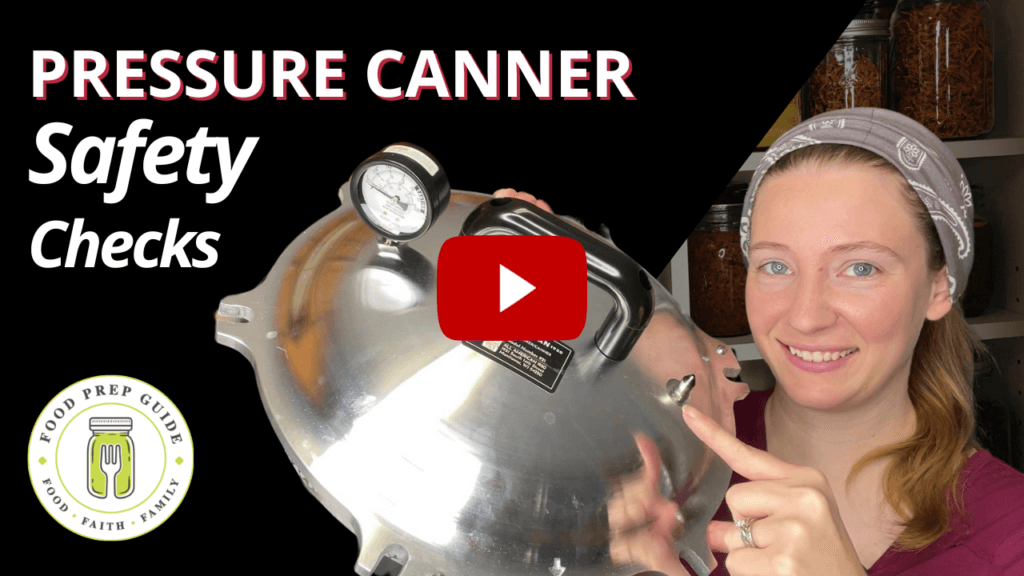
Today we’re sharing five simple but crucial safety checks—some to do before you ever start canning, and others to be mindful of during and after the process.
These apply whether you’re using a traditional stovetop pressure canner or a modern electric model, and they’ll help you preserve food with confidence.
Safety Check #1: Clear the Vent Pipe
Before every canning session, check to make sure your canner’s vent pipe is completely unobstructed. This tiny piece plays a big role—it allows steam to escape during the venting process and prevents dangerous pressure buildup.
How to check it:
- Hold the lid up to a light source.
- You should be able to clearly see a stream of light through the vent pipe.
- If it’s blocked, clean it with a pipe cleaner or small brush.
This is especially important if your canner has been in storage or if you’ve had siphoning issues in a previous session. A blocked vent pipe can lead to unsafe pressure levels.
Safety Check #2: Lock the Lid Evenly
If you’re using a stovetop canner with screw-down knobs (like the All-American 921), be sure to tighten the lid in opposite pairs—not one knob at a time. This keeps the lid level and ensures a proper seal.
Here’s how:
- Tighten two knobs on opposite sides at the same time.
- Repeat with the other pairs until all are secure.
- Check that the lid gap is even all the way around.
If your lid is slightly off-kilter, it can compromise pressure buildup and create leaks. Some newer digital models have self-locking lids, but it’s always smart to double-check.
Can with Confidence!
What if you could enjoy year-round, rock-bottom prices on produce? Canning is the key!
Learn how to can safely in our self-paced, online Canning 101 Master Class!
Safety Check #3: Open the Canner Safely
Once your canning time is complete, it’s tempting to rush—but don’t! Let your canner fully depressurize before you open the lid.
Steps to follow:
- Wait until the pressure gauge reads zero (or the indicator drops if using an electric canner).
- Remove the weight (or pressure regulator).
- Wait another 3–5 minutes before opening the lid.
- Open the lid in a shield position—tilting it away from your face and arms to avoid steam burns.
Even if your electric canner says “Done,” always wait for the vent indicator to drop before trying to open the lid. These built-in safety features are there for a reason—get familiar with them and trust the process.
Safety Check #4: Use a Rack in the Bottom
Never can without a rack inside your canner! This simple step prevents your jars from coming into direct contact with the bottom of the pot, which gets extremely hot and can cause jars to crack or shatter.
If you’re switching between water bath and pressure canning often, it’s easy to forget this part—ask us how we know! But the rack is essential for safe pressure canning, every single time.
Safety Check #5: Use the Shield Method When Lifting the Lid
This might seem like a small detail, but when you’re opening that canner, always tilt the lid away from your body.
Think of it like a shield—you want the steam to release away from your arm and face. Steam burns are no joke, especially when you’re distracted or in a rush.
Whether you’re using a stovetop model or an electric canner, lifting the lid safely is a step you should never skip.
Bonus Tip: Don’t Let Fear Hold You Back
We know pressure canning can feel intimidating—especially at first. Stacy stuck with water bath canning for a full year before building the confidence to move on to pressure canning. And that’s okay! Take it one step at a time.
The truth is, pressure canners are designed with safety features—and you’ve got a whole community here to support you.