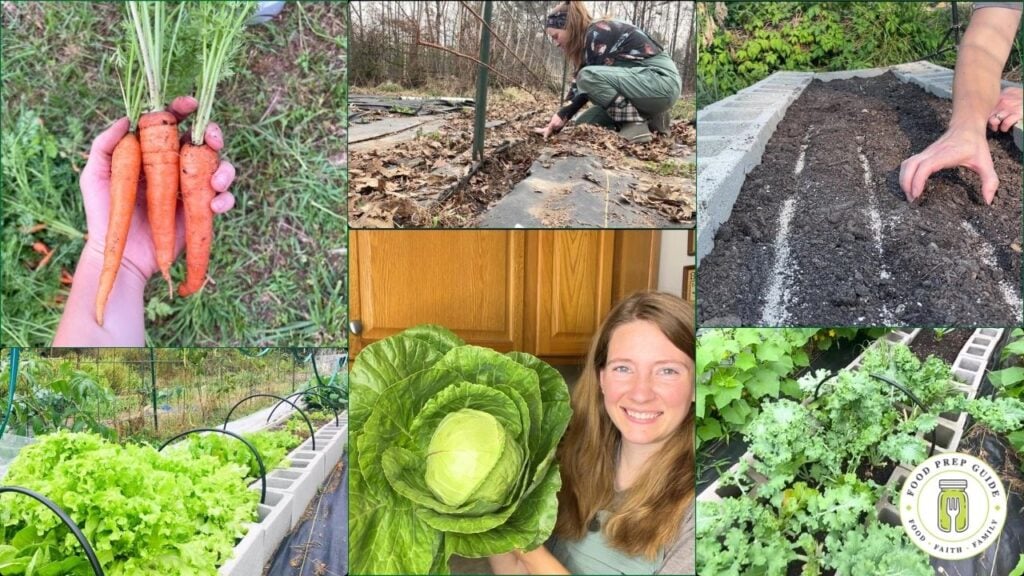
Raise your hand if you think the garden shuts down the minute summer ends.
I used to believe that too. But here’s the truth: fall is one of the best growing windows of the whole year—and in a lot of ways, it’s easier than summer.
Cooler weather means sweeter carrots, less bitter kale, and harvests that keep your kitchen stocked long after the tomatoes are gone. And you get all of that with less work, not more.
Today I’m walking you through 15 vegetables you can plant in the fall, broken into three simple categories: leafy greens, root vegetables, and brassicas (that’s just a fancy word for the cabbage family). But first, let me tell you why fall gardening might be the easiest gardening you’ll do all year.
Why Fall Gardening Is Actually Easier
Once you understand these three things, you’ll wonder why you didn’t start sooner.
Less watering. Cooler temperatures mean your plants aren’t stressed by heat all day. You’re not out there every single evening dragging the hose around.
Fewer pests. Most garden pests slow way down or disappear entirely when temperatures drop. Fewer aphids, fewer beetles, fewer headaches.
Better flavor. This is the big one. Many vegetables actually taste better after a light frost. The cold triggers them to convert starches into sugars as a natural antifreeze. That’s why fall carrots taste like candy and kale loses its bitterness.
So if the summer garden has ever intimidated you, fall is your chance for a gentler start. Let’s get into the list.
Leafy Greens (Your Fastest Growers)
1. Spinach is probably the easiest fall green there is. It loves cool weather, hates the heat, and you can harvest leaves in as little as 30 days. Plant it in rows about 6 inches apart, keep the soil moist while it germinates, and plant a fresh row every two weeks for a continuous supply.
2. Kale is nearly indestructible. It handles frost down to about 20°F and honestly tastes better after a light freeze. Space transplants or seeds 12 to 18 inches apart, and it’ll keep producing all winter—sometimes right through the snow.
3. Lettuce grows better in fall than summer because it won’t bolt in the heat. Plant a mix of varieties—Romaine, buttercrunch, loose leaf—every couple of weeks. With some hardy frost cloth, you can be harvesting fresh salads well into December.
4. Arugula is ridiculously fast, going from seed to harvest in 20 to 30 days. It’s got that peppery bite that’s wonderful in salads and on sandwiches. Let a few plants go to seed and they’ll come back on their own next spring.
5. Mustard greens are similar—fast, cold tolerant, and full of flavor, ready in 30 to 40 days. Use the young leaves raw or cook the mature ones just like collards.
6. Swiss chard is a set-it-and-forget-it crop. It shrugs off light frost and keeps producing until a hard freeze. Bonus: those colorful stems are gorgeous even when everything around them is dying back.
7. Collard greens are your best friend in a cold-winter climate. They’re extremely cold hardy and taste better after they’ve been kissed by frost.
Root Vegetables (Worth the Wait)
8. Carrots are hands down the sweetest thing you’ll pull out of a fall garden. Plant them in loose, well-drained soil—if your soil is compacted or rocky, they’ll fork and split. Depending on the variety, they take 60 to 100 days. Here’s my favorite trick: cover them with a deep layer of mulch before the ground freezes, then dig one out through the mulch anytime you need it all winter.
9. Beets are a two-for-one crop—you eat the roots and the greens. They’re usually ready in 50 to 60 days. If you think you don’t like beets, roast some fall-grown ones. They’re sweeter and less earthy than spring or summer beets.
10. Radishes are the ultimate beginner crop, ready in just 25 to 30 days. They practically grow themselves. They’re also a wonderful crop to plant with kids—those fast results keep the little ones interested.
11. Turnips are underrated. Both the roots and greens are edible, they mature in 40 to 60 days, and frost makes them milder and sweeter.
Brassicas (The Cabbage Family)
These take longer, so a heads-up: if it’s already October where you are, you may need transplants and some frost cover to get these across the finish line.
12. Broccoli thrives in cool weather—it actually needs it to form tight, dense heads. Broccoli takes about 60 to 70 days from transplant. After you cut the main head, leave the plant in the ground and it’ll keep giving you side shoots for weeks.
13. Cauliflower needs consistent moisture and cool temperatures, maturing in 55 to 80 days. About a week or two before harvest, bundle the outer leaves up over the head and tie them—a process called blanching that keeps the head white and tender.
14. Brussels sprouts are a commitment crop at 90 to 100 days, but the sprouts get sweeter after a frost or two. Our first year growing them, we had 6 inches of snow on the ground at harvest. They’re that hardy.
15. Cabbage loves cool weather and forms big, dense heads that store for months. Plant transplants in late summer or early fall; depending on the variety, it takes 60 to 90 days.
The Key to It All: Timing
Timing is everything in the fall garden, and it comes down to one number—your average first frost date. Find it by googling your zip code plus “first frost date,” or by calling your local extension office.
Then count backwards. Take the days to maturity on your seed packet and subtract from your frost date. If your first frost is October 15th and your broccoli needs 70 days, you’d need it in the ground by early August.
If you’re reading this in October thinking you’ve missed the window for broccoli and cauliflower—you’re probably right for this year, and that’s okay. But you have not missed the fast growers. Right now, many areas can still plant spinach, arugula, lettuce, radishes, and mustard greens. And if you’re in a warm zone like 9 or 10, you can plant nearly everything on this list and harvest all winter.
One more practical note. Direct seed these straight into the ground: carrots, radishes, beets, turnips, lettuce, spinach, and arugula. Use transplants for broccoli, cauliflower, cabbage, and Brussels sprouts. And keep some row covers, frost cloth, or even old bed sheets on hand for when temperatures dip below 32°F for several hours.
Your Turn to Grow
Here’s my challenge to you: even if you can only get one or two things in the ground this fall, do it anyway. Learn the process now, while the stakes are low. Next year, you’ll know exactly when to start and what to expect. That’s how we build real food-growing skills—one season at a time.
If you want a simple, done-for-you plan of exactly which staple crops to grow (and when), grab our FREE Staples Garden Plan here: https://foodprepguide.com/op/staples-garden-printable/
And if you’re ready to go all in on growing and preserving your own food from seed to table, our Sprout to Supper Course walks you through every step: https://foodprepguide.com/shop/
Which fall vegetable are you planting first? Drop a comment and let me know—I love hearing what’s going in your garden!