Raise your hand if you’ve ever stood in front of the pantry at 5:30 PM with zero dinner plans and three hungry kids circling like sharks. 🙋♀️
We’ve all been there. And that’s exactly why we love meals in jars.
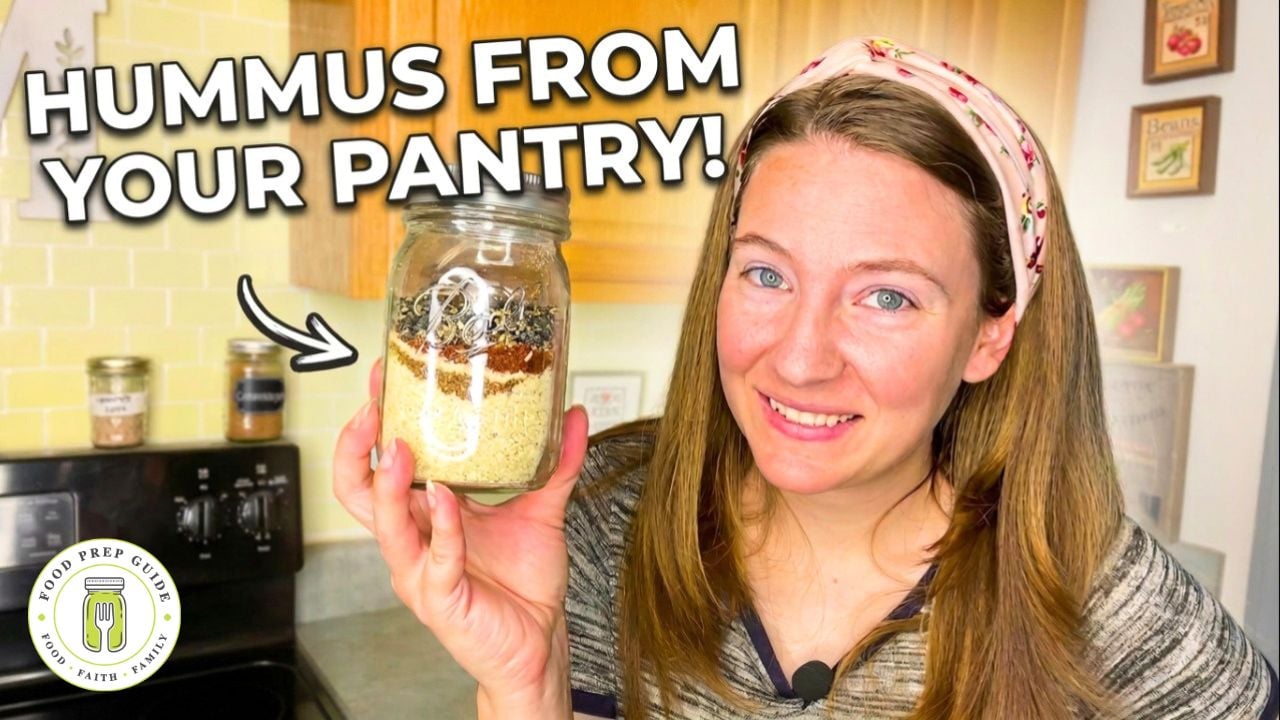
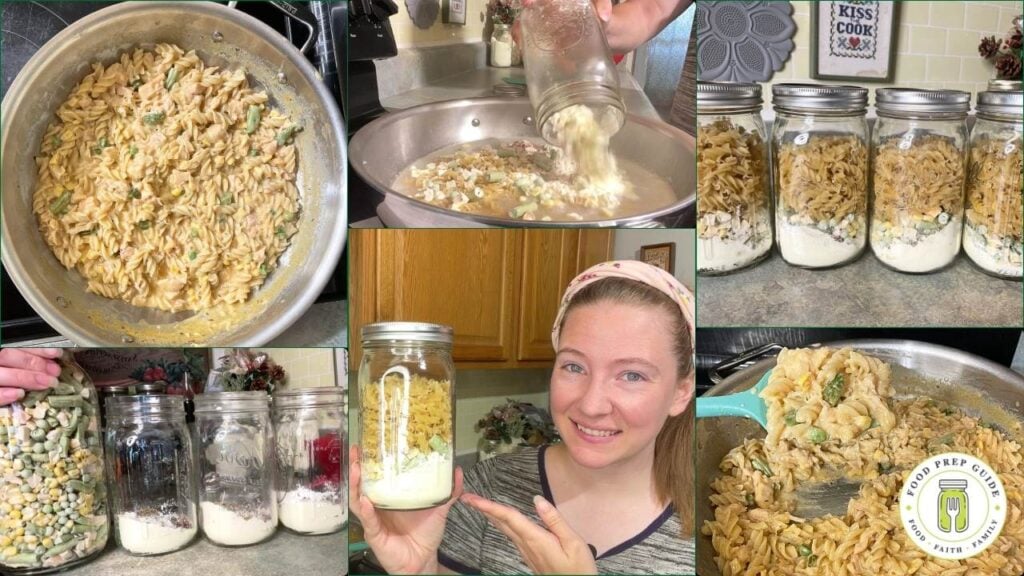
Today I’m sharing one of the quickest recipes in our entire mix-in-a-jar series: Creamy Cheddar Chicken Noodle Skillet. Everything gets packed into one jar and parked on your pantry shelf. When dinner rolls around, you just add water, simmer, and serve.
No freezer. No thawing. No “what’s for dinner” panic.
Let’s walk through it together.
What Goes in the Jar
Here’s everything you’ll layer into a quart jar:
- 1/4 cup whole milk powder
- 1/4 cup cheddar cheese powder
- 2 teaspoons arrowroot powder (or cornstarch or flour)
- 2 teaspoons onion powder
- 1 teaspoon Italian seasoning blend (dried oregano works too)
- 1/2 teaspoon smoked paprika
- 1/4 teaspoon pepper
- 1/2 cup freeze-dried mixed vegetables (or 1/4 cup dehydrated)
- 2 cups small pasta (rotini, small shells, or elbow macaroni)
A funnel is your best friend for that pasta—trust me, otherwise it goes everywhere.
A Few Notes on Ingredients (From Trial and Error)
Milk powder: I always use whole milk powder instead of instant. Yes, instant milk from Walmart will work in a pinch. But the creaminess of whole milk powder can’t be beat. Our favorite brands are Hoosier Hill Farm and Judee’s—both are just whole milk powder, nothing else. No additives, and the flavor is so much better.
Cheddar powder: My favorite is white cheddar (Hoosier Hill Farm makes a great one that’s available on Amazon). Any cheese powder you have on hand will work, but I love how the white cheddar keeps the whole dish a nice creamy color—and the flavor is why I keep coming back to it.
Thickening agent: You have options here. Arrowroot powder, cornstarch, or flour—whatever you typically use in your own recipes. I almost always reach for arrowroot powder. I try to avoid cornstarch because of GMO corn concerns, and while we grow our own corn some years, turning it into cornstarch is more than my brain wants to deal with. Bonus: arrowroot powder has a ton of other uses around the house, too.
Spices: We get most of our spices from Frontier Co-op. Their organic herbs are the best prices I’ve found, and the quality is consistently excellent.
Vegetables: Freeze-dried or dehydrated both work! Just remember this simple swap: 1/2 cup freeze-dried OR 1/4 cup dehydrated. Dehydrated veggies are more condensed, so you need less.
Pasta: The 2-cup measurement is for small pasta—rotini, small shells, or elbow macaroni. Using something bigger like penne? Drop it down to 1 1/2 cups.
SKIP THE BOX—MAKE YOUR OWN CONVENIENCE MEALS IN MINUTES!
Your secret? Pre-made mixes ready when you are.
Here’s My Favorite Frugal Veggie Hack
Those frozen mixed vegetable blends at the grocery store go on sale once or twice a year. When they do, I stock up on a year’s supply, then run them all through my freeze dryer (I used to use my dehydrator—both work great).
Boom—shelf-stable vegetables for pennies, ready to pour into jar meals all year long. It’s one of the most strategic ways we stretch our grocery budget.
How to Cook It
When I say this is super easy, I am not kidding:
- Bring 4 cups of water and 2 tablespoons of butter to a boil.
- Add the contents of your jar plus 1 can of chicken.
- Return to a boil, then lower to a simmer.
- Simmer about 15 minutes, stirring occasionally.
- Remove from heat and let it rest 5 minutes before serving.
That resting time lets it thicken up beautifully—creamy, cheesy, with chunks of chicken and vegetables scattered throughout.
A note on serving size: For my family of five, this makes a great lunch. If I’m serving it for dinner, I double the recipe and use a whole pint of our home-canned chicken. And here’s the thing—you can add more chicken without adjusting anything else. The water gets absorbed by the pasta and vegetables, not the chicken, so pile it in if your crew is extra hungry.
Do You Need to Vacuum Seal the Jar?
Here’s my simple rule: every ingredient in this jar is shelf-stable for at least 6 months. If I know I’ll rotate through the jar within 6 months, I don’t bother vacuum sealing. If it might sit longer than that, I vacuum seal the jar for extra protection.
Simple, prudent, done.
This is what intentional food storage looks like—real meals, made from ingredients you chose, waiting on your shelf for the day you need them. Whether that’s a busy Tuesday or an unexpected hard season, your family eats well either way!