Bugs have a heightened sense of smell. In fact, ants can detect the scent of sugar from a mile away. This is why it’s so important to store food properly.
Our best pest-fighting strategies are based on removing pests’ ability to:
- breathe
- hatch
- move
- smell the food source
Removing Their Air Source: Oxygen Absorbers or Vacuum Sealing
Oxygen absorbers remove oxygen from the local environment, which not only extends the life of the food but makes it impossible for most insects to survive.
It’s important to make sure you use oxygen absorbers properly though. They should only be added to containers of dry food (with 10% or less moisture or oil content).
They come in different sizes—from 50cc all the way up to 2000+cc. I usually work with 100cc packets as they are the appropriate size for Mason jars. If I need to use them in something larger, I can put in multiple packs.
For size reference, 300cc is appropriate for gallon-sized mylar bags.

Prices pulled from the Amazon Product Advertising API on:
Product prices and availability are accurate as of the date/time indicated and are subject to change. Any price and availability information displayed on [relevant Amazon Site(s), as applicable] at the time of purchase will apply to the purchase of this product.
Otherwise, the combination of the oxygen absorber and the moisture/oil can result in botulism. They should, for example, never be used with brown sugar.
They should also not be used in yeast storage, as yeast is alive and needs some oxygen to survive.
As an alternative to oxygen absorbers, you can remove air via vacuum sealing.
Killing Invisible Larvae: Freezing
If you’ve ever encountered a weevil infestation in your flour, you’ll never forget it. I still have flashbacks from the Great Weevil Incident of 2010!
Weevils and other insects can get into your flour at any point before you use it—during processing, in the supermarket, or even after it’s in your own house.
These insidious little creatures lay eggs in the flour or in the paper bag it’s packaged in, and hatch after you’ve stored the flour.
You go to all this trouble to keep air and rodents and mold and sunlight away from your flour, only to open a container ruined by flour bugs!
So how do you prevent weevil nightmares?
The best way to keep your flour from being overrun by insects is to freeze it for at least 24-48 hours before storing it. This will kill the eggs and keep them from hatching.
If you’re not able to freeze all your flour, add oxygen absorbers to prevent eggs from hatching or diatomaceous earth to kill insects once they’ve hatched. It will still be pretty icky to open your flour and find dead bugs, but at least they won’t continue their life cycle.
If possible, just do yourself a favor and freeze it to keep those nasties from hatching in the first place.
Stopping Pests If They Get In: Diatomaceous Earth
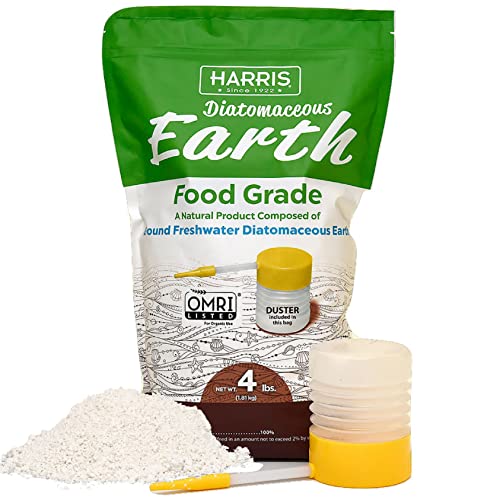
Diatomaceous earth is a naturally occurring, powdered substance made from fossilized algae. If you were to look at it under a microscope, you’d see lots of sharp, pointy edges.
They don’t harm us, but they do harm—and kill—insects.
Prices pulled from the Amazon Product Advertising API on:
Product prices and availability are accurate as of the date/time indicated and are subject to change. Any price and availability information displayed on [relevant Amazon Site(s), as applicable] at the time of purchase will apply to the purchase of this product.
It’s important to only use food-grade diatomaceous earth, and you don’t have to use much (usually a teaspoon per pound of food). Also, pour the DE slowly so as to minimize dispersion in the air. You don’t want to breathe it in.
We sprinkle it into our 5-gallon buckets of beans and pasta since such foods can easily be rinsed before use.
Overwhelming Pests’ Senses: Bay Leaves
Bay leaves aren’t just for homemade spaghetti sauce and chicken cacciatore—who knew? These leaves are awesome for keeping insects out of your food supply. Pests simply hate the smell of it!

Prices pulled from the Amazon Product Advertising API on:
Product prices and availability are accurate as of the date/time indicated and are subject to change. Any price and availability information displayed on [relevant Amazon Site(s), as applicable] at the time of purchase will apply to the purchase of this product.
You can place bay leaves inside your food containers or sprinkle throughout the area where they are stored.
Be sure to replace them every few months since they do lose effectiveness over time.
This video shows how and where I place bay leaves: